-

Macronutrients in Parenteral Nutrition: A Clinical Overview
Parenteral nutrition (PN) serves as a lifeline for patients who cannot meet their nutritional needs through enteral intake. The provision of adequate macronutrients — carbohydrates, nitrogen (amino acids), and lipids — requires careful clinical consideration to optimize ...Read more -

A Practical Look at Gastrostomy Feeding: History, Use, and Considerations
Most patients who need nutrition support therapy receive it for less than a month. For short-term enteral feeding, nasogastric or orogastric tubes are usually the first choice. They are easy to insert and remove, come in different lengths and sizes, and can be placed at the bedside, under endosco...Read more -

Understanding Home TPN Management: A Guide to Safe Handling and Storage
Total Parenteral Nutrition (TPN) is a life-sustaining therapy for individuals who cannot obtain adequate nutrition through oral or enteral routes. Administering TPN at home allows patients to leave the hospital setting, but it also places significant responsibility on the patient or caregiver. Su...Read more -

Understanding Power-Injectable Catheters: A Practical Overview
Power-injectable catheters are specifically designed to withstand the rapid infusion of contrast media during CT or MRI scans using high-flow injectors. These devices may be either port-type systems or catheter-only systems without a reservoir, such as PICCs or midlines. As highlighted in the p...Read more -

The Vital Role of Hydration in Enteral Feeding: Why Water Matters More Than You Think
Water is often referred to as the “forgotten nutrient.” While much attention is given to proteins, carbohydrates, and fats, water is just as essential—yet it is frequently overlooked, especially in clinical nutrition settings such as enteral feeding. In the context of enteral nutrition, hydration...Read more -

Home Care and Health Education After PICC Insertion
I. What is PICC? PICC stands for “Peripherally Inserted Central Catheter.” It is inserted through a peripheral vein in the arm, with the catheter tip positioned in the lower one-third of the superior vena cava. It provides a safe and reliable venous access for patients who require inf...Read more -

Parenteral Nutrition (PN): What to Expect During Treatment
Parenteral Nutrition (PN) is a method of providing complete nutritional support directly into the bloodstream for patients whose gastrointestinal systems cannot be used adequately. If you are about to begin PN, here is an overview of the treatment process, from preparati...Read more -

The Essential Guide to Flushing a Feeding Tube: A Non-Negotiable Practice
For patients and caregivers relying on enteral feeding, a common yet critical question arises: is flushing the tube truly necessary? The definitive answer is an unequivocal yes. Neglecting this simple step is not an option, as it directly compromises patient safety, nutrition, and the tube’...Read more -

A Guide to Nasogastric Tube Feeding at Home
Nasogastric tube feeding, commonly known as NG tube feeding, is the predominant method for providing enteral nutrition to patients who cannot consume food orally. This involves a thin tube passed through the nose, down the esophagus, and into the stomach. While alternati...Read more -

Understanding Total Parenteral Nutrition: A Lifeline Through Veins
While most individuals meet their nutritional needs through a regular diet, certain medical conditions can make this impossible. In such cases, Total Parenteral Nutrition (TPN) becomes a vital medical intervention. TPN is a method of providing a person with 100% of their...Read more -

PICC Line Placement with Fluoroscopy: Techniques and the Value of Multidisciplinary Care
The peripherally inserted central catheter (PICC) provides reliable long-term venous access for both inpatients and outpatients, facilitating the administration of medications, parenteral nutrition, and fluids, as well as blood sampling. Insertion can be performed with o...Read more -
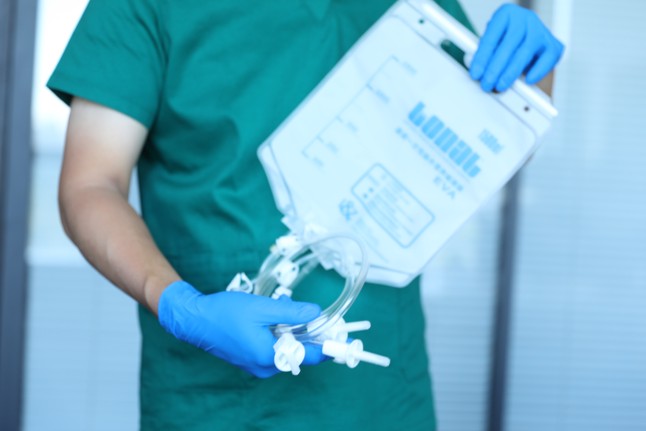
New Consensus Aims to Guide Safer Use of Parenteral Nutrition
Parenteral nutrition (PN), providing essential nutrients intravenously, is a life-sustaining therapy for patients whose gastrointestinal (GI) tracts cannot digest or absorb food. However, as a complex and high-alert treatment, PN carries risks like infections and metabol...Read more

